
What is hazardous area classification?
Hazardous location classification is the process of identifying and categorizing areas where flammable gases, vapors, or dusts may be present in sufficient quantities to cause fire or explosion. Electrical equipment installed in such locations can provide an ignition source through electrical arcing or elevated surface temperature. Standards and regulations exist to identify these locations, classify the associated hazards, and establish requirements for equipment designed for safe use within them.
Why does ignition risk matter in hazardous locations?
A light switch may cause a small, harmless spark when switched on or off. In an ordinary household this is of no concern, but if a flammable atmosphere is present, the arc might start an explosion. In many industrial, commercial, and scientific settings, the presence of such an atmosphere is a common, or at least commonly possible, occurrence. Protecting against fire/explosion is of interest for both personnel safety as well as reliability reasons.
What protection strategies reduce hazardous location risk?
Three main protection strategies apply to hazardous locations:
- Minimize electrical equipment in the area — keep equipment out of the hazardous zone entirely
- Reduce the hazard itself — apply process changes or ventilation with clean air to eliminate or dilute the flammable atmosphere
- Design equipment for safe operation within the hazard — apply intrinsic safety (minimal operating energy, insufficient to cause ignition) or explosion-proofing (containing ignition hazards and any resulting fire or explosion)
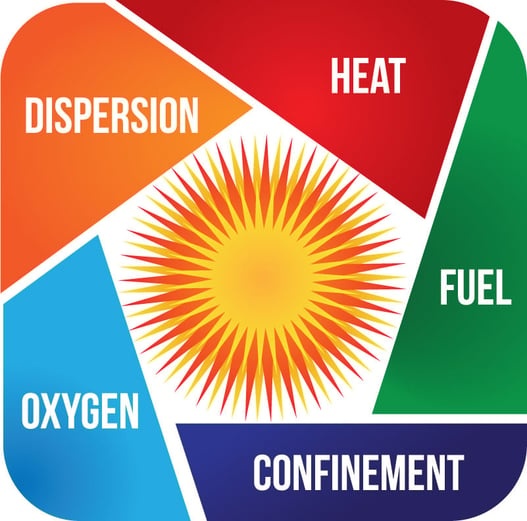
When equipment must be placed in a hazardous location, it can be designed to reduce the risk of fire or explosion. Intrinsic safety designs equipment to operate using minimal energy, insufficient to cause ignition. Explosion-proofing designs equipment to contain ignition hazards, prevent entry of hazardous substances, and/or, contain any fire/explosion that could occur.
How do international standards for hazardous location equipment vary?
Different countries have approached the standardization and testing of equipment for hazardous areas in different ways. Terminology for both hazards and protective measures can vary. Documentation requirements likewise vary. As world trade becomes more globalized, international standards are slowly converging, so that a wider range of acceptable techniques can be approved by national regulatory agencies.
What is the classification process and who oversees it?
The process of determining the type and extent of hazardous locations is called classification. The classification of locations, testing and listing of equipment, and inspection of installations are typically overseen by governmental bodies — for example, the Occupational Safety and Health Administration (OSHA) in the United States.